

Tigran Grigoryan
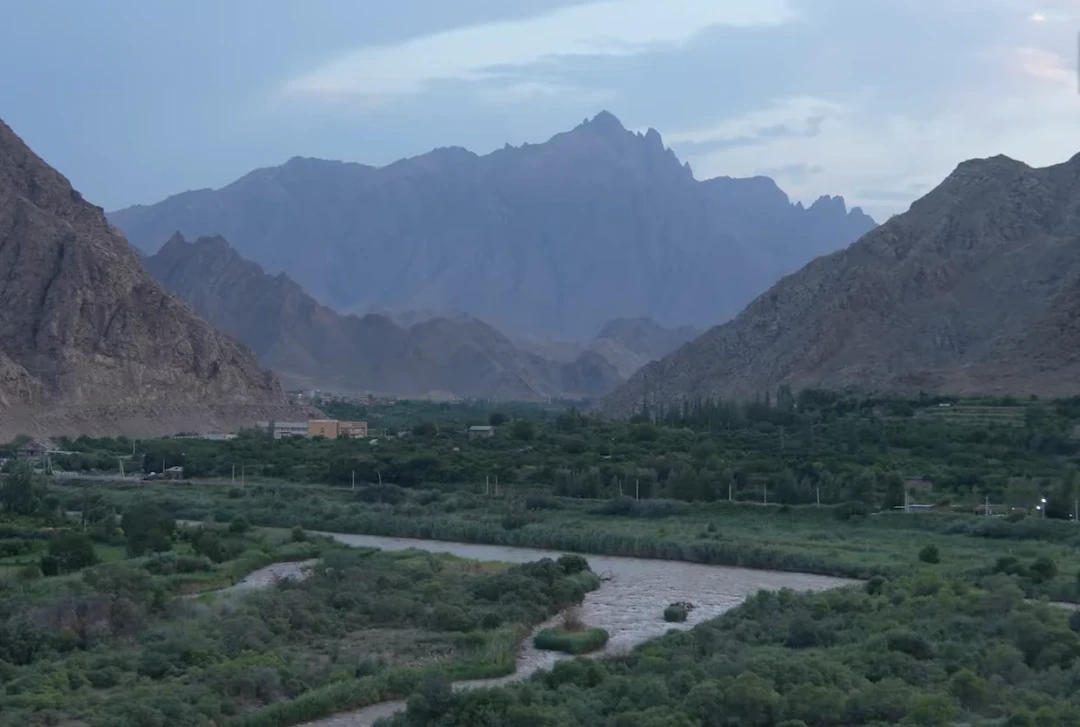
From June 15 to 18, our team at the Regional Center for Democracy and Security conducted a research visit to Armenia’s Syunik Province. The purpose of the visit was twofold: to carry out field research on the prospects for implementing the TRIPP project and to organize meetings and discussions with local residents and officials in several communities across the province. During the visit, we also had the opportunity to travel along almost the entire route where the project’s main infrastructure is expected to be built.
Based on our meetings, public discussions, and informal conversations, we recorded a number of observations that may be useful for decision-makers seeking to avoid unnecessary challenges during the implementation of the project.
The first and clearest observation is that both residents and local officials in the communities located along, or near, the planned route of the project possess very limited information about the implementation process and the contents of the bilateral agreements that have already been concluded. During our informal conversations with residents of Meghri and Agarak—which are not intended to be representative from a sociological perspective—we frequently encountered concerns that had already been addressed in the January TRIPP implementation framework document and in the Framework Agreement on Strategic Cooperation concerning the TRIPP project.
If there is an expectation that citizens will study these documents independently and find answers to their questions on their own, that expectation is unrealistic. Moreover, residents often raise questions that only the government can answer. There is therefore already a clear need for systematic communication with local communities. This includes discussions of practical issues that will directly affect the daily lives of people living in these areas.
One such issue concerns the transfer of privately or municipally owned land and infrastructure into state ownership. Article 6(1) of the Framework Agreement on Strategic Cooperation regarding TRIPP states that:
“Armenia shall take all steps consistent with Armenian law and with all expediency to: (i) ensure that the land along the TRIPP Implementation Areas is, or may become, the property of Armenia; and (ii) ensure such land is free from any encumbrances or third-party rights, and shall bear all financial costs associated with these processes.”
Traveling along the proposed route, one can observe numerous privately and municipally owned plots of land and infrastructure that may be affected by this provision. For example, the village of Nrnadzor operates two pumping stations within the relevant area. Once the transfer process begins, these facilities will likely need to be relocated. However, local residents are currently not aware that such changes may be required as part of the project implementation.
In Meghri and Agarak, there are also concerns that the project could create economic challenges for local communities. In particular, residents fear that trade and passenger traffic currently moving along the Iran–Armenia (Yerevan) route through Syunik could gradually shift to a Julfa–Nakhichevan–Yerevan direction, bypassing the area altogether. For decades, customs operations, transit traffic, tourism, and freight transportation have generated income, business opportunities, and service-sector activity in southern Syunik. The potential loss of these economic benefits worries many locals.
At the same time, there are also positive expectations regarding the project. A full reopening of regional communications would allow communities in southern Syunik to send goods more efficiently by rail to Yerevan via Nakhichevan and to Russia via Azerbaijan’s mainland territory. Many local residents recognize the economic opportunities that improved connectivity could bring.Regardless of whether these concerns materialize in practice, they highlight the need for a more proactive government communication strategy. Residents of Syunik should have access to clear information about the anticipated economic effects of the project, including both potential risks and opportunities. Addressing these questions at an early stage could help prevent misconceptions and reduce uncertainty among local communities.
On the final day of our trip, we held a public discussion on TRIPP in Goris, bringing together more than two dozen local residents. Goris presents a somewhat different picture. As a result of the wars and territorial losses of 2020–2023, the city was effectively cut off from important economic flows originating from both Nagorno-Karabakh and Iran. The Kapan–Goris–Sisian highway was replaced by the Kapan–Tatev–Sisian route, bypassing Goris, while the city increasingly found itself in a borderland dead end. Following the Washington Summit of August 2025, however, local perceptions have become more optimistic.
The absence of major security escalations over the past year has contributed to a revival of business activity. Combined with Goris’s distinctive architectural heritage and several innovative initiatives undertaken by local authorities, the city has become an increasingly attractive tourism destination, stimulating growth in the hospitality sector. The Washington Summit has significantly changed local perceptions of security. Local businesses appear more willing to make long-term investments and engage in future planning. This corresponds with our broader assessment that the most significant takeaway from the Washington Summit at this stage is the reduced risk of border escalations and the resulting shift in public perceptions, which is already generating positive secondary effects in communities that are among the most vulnerable to destabilization.
The discussions we held throughout Syunik revealed a complex picture. Public opinion is neither uniformly supportive nor uniformly opposed to the TRIPP project. Instead, local communities are attempting to understand how these large-scale geopolitical and infrastructural developments will affect their daily lives, economic prospects, and future security. Addressing these concerns through transparent communication and sustained engagement with local stakeholders will be essential if the project is to proceed successfully and enjoy public legitimacy.
The article was originally published on CivilNet.