

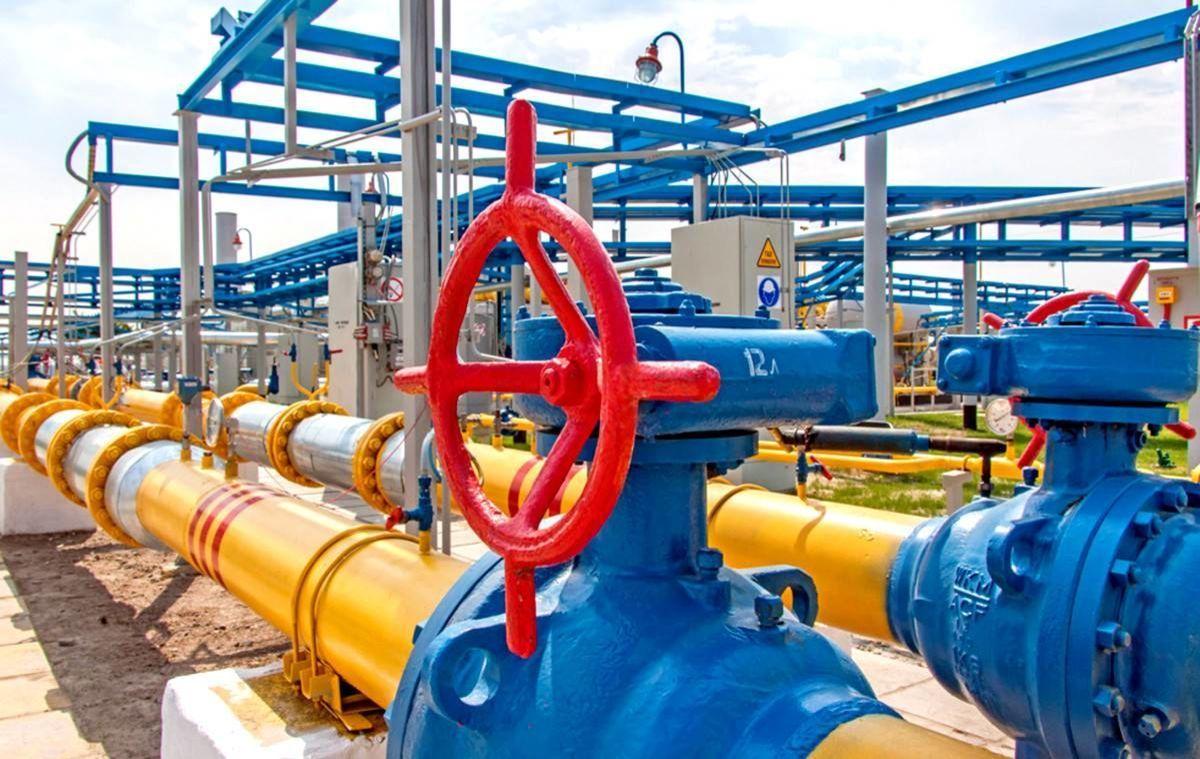
In recent months, Russian officials at various levels and representatives of the Russian media have repeatedly stated that Armenia could lose its current “preferential” price for Russian gas and be forced to purchase gas at “market prices.” The wholesale price of natural gas in Europe is often cited as an example of such a market price.
However, one of the most important questions in this debate often goes unanswered: what would the elimination of the “preferential price” actually mean for Armenia? The current price of Russian gas for Armenia is not the result of a single political decision or one contract. It has been established through a series of interconnected interstate and commercial arrangements that have been in effect for more than a decade.
Therefore, the first step is to understand the legal and contractual framework underlying the current price, identify the consequences of changing specific arrangements, and only then assess the potential impact on Armenia’s economy and gas and electricity tariffs.
How Was the Current Price Established?
The system is based on several interconnected agreements signed between Armenia and Russia in 2013.
Under the intergovernmental agreement on the procedure for determining prices during natural gas deliveries, signed on December 2, 2013, the base price of gas for Armenia was set at $189 per 1,000 cubic meters.
The same agreement also established a formula for calculating the impact of export customs duties:
P = P₀ / (1 − T),
where P₀ is the base price and T is the Russian export customs duty rate.
Russia’s export customs duty on pipeline natural gas is 30%. If this duty were applied to the 2013 base price of $189, the price would be:
189 / 0.70 = $270.
In other words, the frequently cited figure of $270 is not the result of simply adding 30% to $189. It is the price at which the 30% customs duty accounts for the difference between the total and the base price, while the remaining 70% equals $189.
However, under another intergovernmental agreement signed on the same day, Russia does not levy an export customs duty on agreed volumes of natural gas intended for domestic consumption in Armenia. Consequently, Armenia operates under a special contractual arrangement.
The 2013 agreement also provided for subsequent price indexation based on changes in the regulated gas price in Russia’s Orenburg Region and the US Consumer Price Index. However, this mechanism was modified several times afterward. In 2015, the price was reduced to $165, and in 2016–2018, it was lowered to $150. In 2019, it was raised again to $165.
The current arrangements are also based on a price of $165 for gas with a calorific value of 7,900 kcal per cubic meter. Because the actual calorific value of the gas is higher, the effective price currently paid by Armenia at the border is approximately $177.50 per 1,000 cubic meters.
The pricing arrangement is also linked to the capacity payment mechanism for the Hrazdan-5 power unit. Armenia pays approximately $34.8 million annually to maintain Hrazdan-5’s capacity, and the long-term stability of the $165 base price for Russian gas has been one of the key components of this broader arrangement.
This leads to the first important conclusion: eliminating the “preferential price” is not a single, uniform action. The resulting price will depend on precisely which agreement or arrangement the Russian side withdraws from.
What Does “Market Price” Actually Mean?
The second important question concerns the concept of a “market price.”
There is no single global price for natural gas. Pricing mechanisms include European exchange-traded prices, Asian LNG prices, long-term contracts linked to oil prices, bilateral pipeline gas contracts, and numerous other arrangements.
In recent years, Europe has been one of the most expensive major natural gas markets in the world. In 2023, 2024, and 2025, average annual European gas prices were approximately $470, $393, and $429 per 1,000 cubic meters, respectively. The three-year average was approximately $431.
European prices rose again in 2026. The average for the first nine months was approximately $606, while the average price in September reached around $911.
However, presenting the European exchange-traded price as the global “market price” of natural gas is methodologically incorrect.
Russia’s own gas exports to China provide a particularly revealing example. According to Russian forecasts for 2026, the price of gas sold to China through the Power of Siberia 1 pipeline is approximately $250–260 per 1,000 cubic meters, more specifically $258.80. In other words, Russia itself sells gas to one of its largest markets at a price several times lower than the current European price.
Moreover, according to publicly available information on Russian-Chinese negotiations over the Power of Siberia 2 project, China is seeking a price of approximately $120–130 per 1,000 cubic meters, linked to Russia’s domestic industrial prices. The Russian side, meanwhile, is seeking approximately $250–260, close to the price under the existing Power of Siberia 1 arrangement.
Thus, even in negotiations over a major new long-term contract between Russia and China, the European exchange-traded price is not being treated as the natural starting point.
Turkmenistan provides another important example. China also imports substantial volumes of gas from Turkmenistan, where prices in recent years have been around $290 per 1,000 cubic meters.
Georgia is another relevant regional example. More than 90% of Georgia’s gas consumption is supplied primarily by Azerbaijan. The price is determined by a nonpublic contractual formula and is also linked to Georgia’s transit services. Based on foreign trade data from recent years, the average price is approximately $115 per 1,000 cubic meters.
Another regional example is Iranian gas supplied to Turkey, the price of which has ranged from approximately $280 to $400 per 1,000 cubic meters during different periods in recent years.
These comparisons show that equating the “market price” in potential negotiations with Armenia to the European exchange-traded price has no sound economic basis. A more appropriate benchmark would be long-term pipeline gas contracts, particularly Russian supplies to China and regional gas agreements.
What Scenarios Could Armenia Face?
Scenario 1: Russia Eliminates Only the Export Customs Duty Exemption
This is one of the most straightforward scenarios, but also one that could have a substantial impact. According to media reports, the Russian side informed Armenia of this possibility as early as May.
If the current base price of $165 remains in place but the exemption from the 30% export customs duty is withdrawn, the economic equivalent can be calculated using the pricing logic established in the 2013 agreement.
Starting from the actual border price of approximately $177.50:
177.5 / 0.70 = approximately $253.60 per 1,000 cubic meters.
This would mean a price increase of approximately $76, or around 43%.
If annual gas imports from Russia are assumed to be approximately 2.3 billion cubic meters, the additional outflow from Armenia’s economy could amount to:
$76 × 2.3 billion cubic meters = approximately $175 million annually.
However, an important legal caveat is necessary. This is an economic calculation based on the customs duty mechanism in the 2013 agreement. Without access to the full texts of the current commercial contracts, it cannot be stated definitively that the withdrawal of the exemption would automatically make this figure the new contractual price.
Scenario 2: Russia Withdraws from the Current $165 Pricing Arrangement
In this scenario, it is often mistakenly assumed that the price would automatically return to $270 or $290.
There is, in fact, insufficient legal basis for such a conclusion.
The $270 figure was the equivalent of the 2013 base price of $189 after accounting for the 30% customs duty. It was not the contractual price established for 2026.
Therefore, if the $165 pricing arrangement were terminated, the new price would have to be determined either under the remaining contractual mechanisms or through new negotiations.
International comparisons become particularly important for Armenia in this scenario. If Russia sells gas to China for approximately $250–260 per 1,000 cubic meters, Turkmen gas reaches China at around $290, and even lower prices are being discussed in new Russian-Chinese negotiations, it would be difficult to justify the European exchange-traded price of $600–900 as the natural “market price” for Armenia on economic grounds.
Scenario 3: Both the Current Pricing Arrangement and the Customs Duty Exemption Are Eliminated
This would be a considerably more serious scenario.
However, it would still be impossible to specify a single price in advance, because the new base price would first have to be established.
For example, if the newly negotiated base price were $250, the equivalent price including the 30% export customs duty would be approximately $357.
If the base price were $300, the final equivalent would be approximately $429.
If the base price were $400, the equivalent would be approximately $571.
Therefore, in this scenario, it would be more appropriate to discuss a range of possible prices rather than one predetermined figure.
At the same time, if the termination of the current pricing arrangement also eliminated the obligation to pay approximately $34.8 million annually for Hrazdan-5’s capacity, that amount would need to be deducted from the additional gas costs when assessing the net economic impact.
Scenario 4: The Price Is Linked to the European Market
This is one of the most dangerous scenarios from a pricing perspective.
European prices are not only high but also extremely volatile. In recent years, they have ranged from $300–400 per 1,000 cubic meters, while during periods of crisis, they have exceeded $1,000 and even $2,000.
If Armenia’s gas price were directly linked to a European exchange index, the country would face not only a higher price but also a loss of long-term price predictability.
The economic impact of this scenario should be assessed using several sub-scenarios, for example, border prices of $400, $500, $600, $750, and $900 per 1,000 cubic meters.
Scenario 5: Russia Completely Halts Gas Supplies
This is a fundamentally different type of risk.
A price increase is primarily a matter of financial management and tariff policy. A complete halt to physical gas supplies would instead constitute an energy security challenge.
Armenia currently lacks the technical capacity to rapidly replace the entire annual volume of Russian gas.
For a limited period, it may be possible to manage the minimum electricity generation requirements by making greater use of the Sevan-Hrazdan cascade, increasing gas imports from Iran, rapidly deploying battery storage facilities, improving the management of solar power generation, and implementing several other technical measures.
Replacing natural gas used for heating and hot water would be considerably more difficult, particularly during peak winter demand.
Nevertheless, Armenia has several viable alternative supply routes.
The first is to increase gas imports from Iran, within the seasonal capacity limits of the Armenia-Iran gas pipeline and Iran’s gas transmission system.
The second is the possibility of importing Azerbaijani gas through Georgia. The presence of Azerbaijani and Armenia-bound pipeline infrastructure at the Red Bridge gas junction makes it possible to supply Azerbaijani gas to Armenia through Georgian territory.
The third possibility is to examine the technical condition of the gas pipeline running from Armenia toward Karabakh and assess whether it could be used in the reverse direction.
The fourth is importing Turkmen gas through Iran under a swap arrangement.
During previous negotiations with Turkmenistan, the Turkmen side had expressed its readiness to supply gas to Armenia at market prices, provided that Iran agreed to facilitate the swap. During discussions with the Iranian side, the proposed fee for the swap service was approximately $34 per 1,000 cubic meters.
If we use the current price of Turkmen gas, approximately $290 per 1,000 cubic meters, as the basis for calculation and adopt a more conservative estimate of $40 for Iran’s swap service, the resulting price at Armenia’s border would be approximately:
$290 + $40 = $330 per 1,000 cubic meters.
This is, of course, a calculated estimate rather than a commercial offer currently available. Moreover, the main constraint is not so much the price as the seasonal capacity of Iran’s gas transmission system.
For this reason, Turkmen gas is unlikely to be a viable means of rapidly replacing the entire volume of Russian supplies, particularly during the winter. However, it could become an important seasonal source of supply and, equally importantly, a bargaining tool.
How Would Higher Gas Prices Affect Consumers?
An increase in the border price does not mean that the final consumer tariff must rise by the same percentage.
In addition to the cost of imported gas, the final gas tariff includes various components related to Gazprom Armenia’s transmission, distribution, storage, investment programs, profitability, and other expenses.
The government and the regulatory authority therefore have several options.
The entire price increase could be passed on to consumers, which would be the most painful option for the economy.
Temporary subsidies financed through the state budget could be introduced.
The regulator could revise certain components of Gazprom Armenia’s tariff base, temporarily reduce or defer nonpriority investment expenditure, and adjust certain profitability components.
A combination of these mechanisms is also possible.
Therefore, even a substantial increase in the border price of gas does not necessarily have to be passed on to households and businesses in the same proportion.
The Main Conclusion
Armenia’s Russian gas problem should be divided into two fundamentally different risks: a price increase and a disruption of supplies.
The first, even under fairly severe scenarios, is a problem that can be managed through economic, tariff-related, and negotiating instruments.
The second is a much more serious energy security challenge, because Armenia currently lacks the capacity to rapidly replace the entire volume of Russian gas during the winter.
However, Armenia’s position in price negotiations is considerably stronger than it might appear if one looks only at European prices.
The European exchange-traded price is not a universal global “market price” for natural gas. Russia itself supplies China with long-term pipeline gas at approximately $250–260 per 1,000 cubic meters. China is negotiating substantially lower prices for new Russian gas supplies, while entirely different pricing mechanisms operate in the region and Central Asia.
Consequently, in any new negotiations with Russia, Armenia’s appropriate benchmark should not be Europe’s daily exchange-traded price but comparable international and regional contracts for long-term pipeline gas.
Finally, the phrase “elimination of the preferential price” is not sufficient in itself. The first question must be which agreement is being amended or terminated. Is it the customs duty exemption, the $165 pricing arrangement, the mechanism linked to Hrazdan-5, or the entire contractual framework?
Only after that question has been answered will it be possible to determine precisely how much Russian gas could cost Armenia.
Hakob Vardanyan
Former Deputy Minister of Territorial Administration and Infrastructure overseeing the energy sector