

By Tigran Grigoryan
#DemocracyWatch – The year preceding Armenia’s parliamentary elections was marked by a sharp deterioration in democratic standards. The ruling party, leveraging the state institutions under its control, targeted various opponents, instrumentalized law enforcement and the judiciary to serve narrow political agendas, and increasingly relied on selective justice.
Throughout this period, through the Democracy Watch initiative, we sought to draw attention to these problems. We organized discussions dedicated to these issues and, together with a number of partner organizations, issued statements condemning these practices while calling for adherence to the rule of law, democratic norms, and established procedures.
Some actors within civil society sought to justify the government’s approach, arguing that these legally questionable measures were being used against anti-democratic or pro-Russian actors. Some even openly maintained that, even in the absence of evidence proving that certain individuals or groups were under Russian influence, unconstitutional tools could nevertheless be employed against them because Armenia lacked adequate legal mechanisms to counter foreign interference.
Throughout this period, together with several partner organizations, we warned that such an approach was extremely dangerous. We insisted that democratic principles and procedures must be upheld regardless of who the targeted actors are.
Our principal concern was that tolerance for this conduct—by both domestic and international stakeholders—would simply normalize and legitimize the government’s use of anti-democratic and unconstitutional instruments. If these tools were initially employed against figures perceived as pro-Russian or anti-democratic, tomorrow they could just as easily be used arbitrarily against any critic of the government, irrespective of their political views or affiliations.
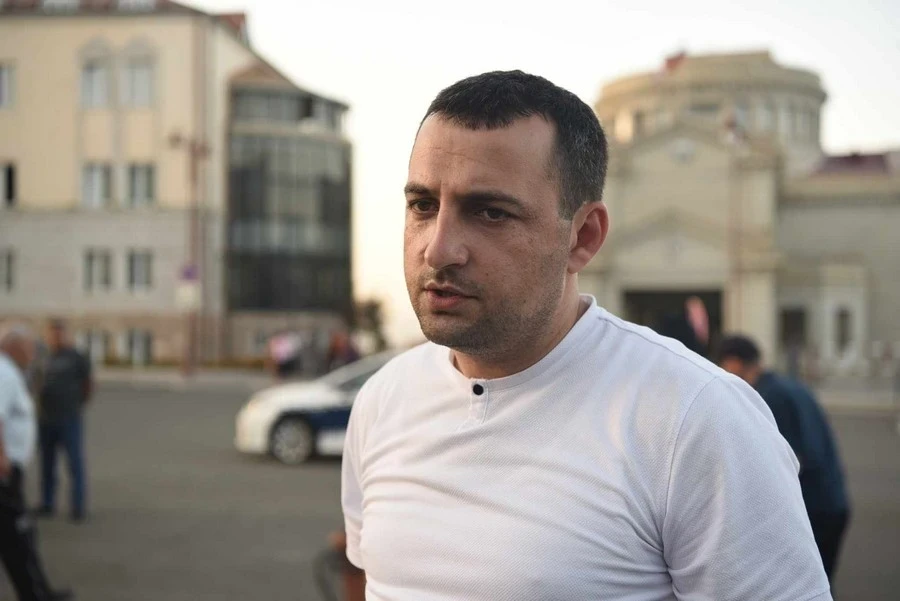
These concerns materialized during the election campaign, when Nagorno-Karabakh activist Artur Osipyan was arrested and placed in pre-trial detention for two months after engaging in a public debate with Prime Minister Nikol Pashinyan. The circumstances surrounding this incident and the subsequent criminal case were discussed in our previous Democracy Watch article.
There is broad consensus within Armenia’s human rights community and even its fragmented civil society that the criminal case against Osipyan is unfounded, lacks the elements of a criminal offense, and is politically motivated. Over the past several weeks, numerous civil society organizations have signed statements, letters, and guarantees calling for his immediate release. As a result of this pressure, on June 10 the preventive measure against Osipyan was changed, and he was released.
Contrary to Pashinyan’s accusations that Osipyan is part of the “Karabakh pseudo-elite,” he has never held public office, has no ties to the former authorities of either Armenia or Nagorno-Karabakh, and has no connection to Russia. On the contrary, while in Nagorno-Karabakh, he organized protests against the Russian peacekeeping mission. This is precisely the kind of case where politicized justice is no longer directed only against former officials or actors associated with Russia, but against other critics of the government as well.
Nor is this an isolated disturbing episode or an unfortunate accident. It is the logical and inevitable consequence of the developments that have unfolded in Armenia over the past year. Any government that is not subject to democratic accountability will, sooner or later, embark on the path of democratic backsliding and authoritarianization.
It is also noteworthy that even this criminal prosecution—so clearly driven by political motives—has failed to provoke any significant public international reaction. This, too, creates incentives for the ruling party to continue down this path.
The only positive aspect of the Osipyan case is that it has, at least temporarily, united Armenia’s fragmented civil society. Numerous organizations and public figures that hold serious disagreements on many other issues joined forces to oppose his unlawful detention. Their efforts took the form of petitions, letters to international institutions, and public criticism. This situational consolidation of civil society played a decisive role in securing Osipyan’s release and demonstrated that, despite the crises of recent years, it can—when willing—serve as a meaningful counterweight to arbitrary exercise of state power and anti-democratic practices.
There is, however, a serious risk that the unity generated by the Osipyan case will prove to be only a brief episode against a much broader backdrop. If different actors continue to respond to problematic developments and abuses of power based on their personal preferences and political sympathies rather than on consistent democratic principles, then in the years ahead Armenia will inevitably see new Artur Osipyans.
Democracy Watch is a joint initiative of CivilNet and the Regional Center for Democracy and Security.