

By Eduard Arakelyan
November 9, 2020, was a turning point not only for Nagorno-Karabakh but also for Armenia’s entire national security system. The loss of Shushi and the subsequent signing of the trilateral statement marked the end of the war on terms that cemented a heavy defeat for the Armenian side. The consequences of these events went far beyond territorial losses and changes to the line of contact. They set in motion the dismantling of the existing security system, a process that ultimately led to the dissolution of the Nagorno-Karabakh Republic in the years that followed.
For Armenia, November 2020 marked the end of an entire military-political era. For decades, the prevailing assumption was that military superiority in the Karabakh direction, fortified positions, and allied relations with Russia provided a sufficient foundation for ensuring security. The 2020 war exposed the limitations of this model.
The loss of Shushi became one of the most powerful symbols of this defeat. By that point, however, the Armenian side had already faced disorganization, the depletion of personnel and material resources, the loss of significant territories, and a deteriorating operational position. The final days of the war merely cemented an outcome shaped by much broader processes.
The Nagorno-Karabakh Defense Army
The Nagorno-Karabakh Defense Army was an integral part of the Armenian military system with actual combat experience. Victory in the First Nagorno-Karabakh War, the subsequent years of confrontation, and the April 2016 fighting had shaped a particular military doctrine.
At the same time, however, approaches that no longer corresponded to the changing nature of warfare had become entrenched. The army that had relied on unconventional solutions, mobility, and unit-level initiative during the first war in the 1990s gradually shifted entirely toward positional defense. The prolonged absence of large-scale combat operations, the fortification of the line of contact, reliance on artillery, and pre-prepared defensive positions contributed to the development of a static model of warfare. As a result, by 2020, the army had largely lost the mobility and tactical flexibility that had characterized it in the early 1990s.
The army lacked sufficient capabilities to counter the full spectrum of modern weapons systems, particularly unmanned platforms, precision-guided weapons, and the integrated use of reconnaissance and firepower. The presence of artillery, armored vehicles, and defensive positions could not guarantee resilience when the adversary was capable of detecting targets, striking them with precision, and rapidly exploiting the resulting advantage. The system failed to adapt to the new character of warfare and to counter the changing conditions and balance of forces.
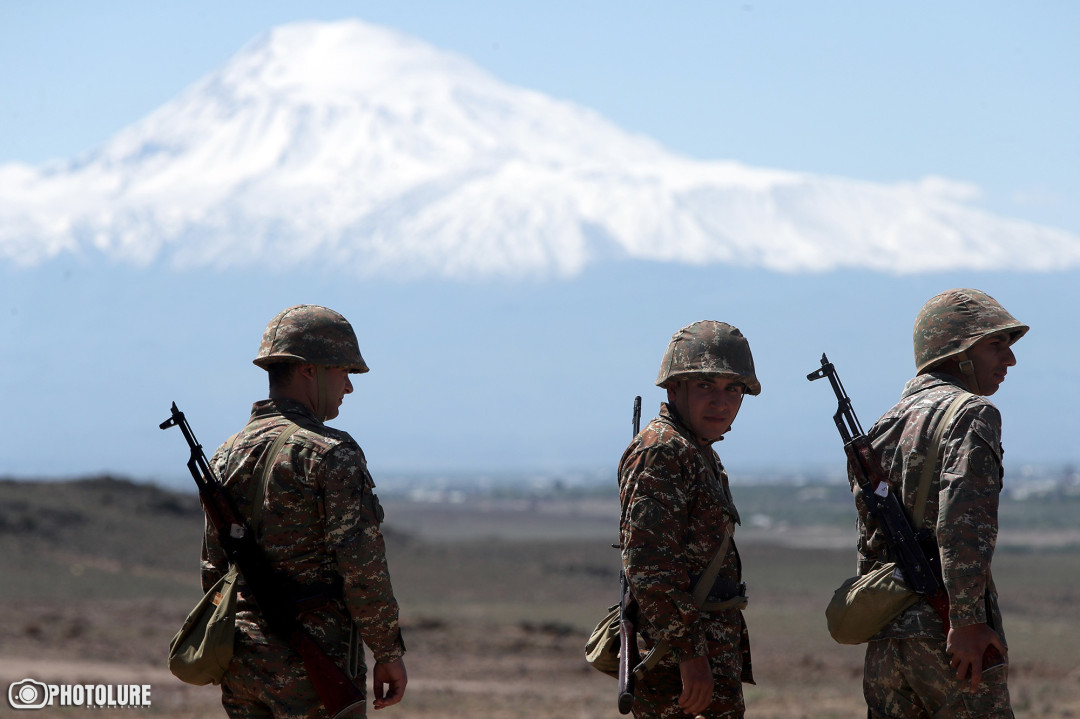
The Armed Forces of the Republic of Armenia
After 2020, the geography of Armenia’s defense changed. Previously, the configuration had allowed for layered defense and additional room for maneuver. The loss of Nagorno-Karabakh fundamentally altered these conditions. Today, Armenia must defend itself without the buffer configuration it previously had. The border now runs along mountain ranges, where the loss of every defensive position or height reduces the time available to respond.
Armenia has begun reconsidering not only its weaponry but also its entire military security system. In recent years, the armed forces have received weapons and equipment manufactured in India, China, Iran, and France, including artillery systems, air defense systems, radar equipment, drones, and other modern capabilities. Cooperation in military training and technology has also expanded. Armenia has begun developing its own defense industry, particularly in unmanned systems, communications, electronic warfare, and many other areas. The emergence of domestic products has demonstrated that local industry is gradually becoming involved in the rearmament process. All of this represents a significant departure from the situation before 2020.
However, diversifying suppliers and purchasing modern weapons systems do not automatically translate into the creation of a comprehensive defense system. The experience of conflicts in the Middle East demonstrates that even when one side enjoys a significant technological advantage, its adversary can compensate for its shortcomings through asymmetric tactics, by exploiting vulnerabilities in military infrastructure, and by imposing additional costs on the stronger side. Ukraine, meanwhile, is now in its fifth year of war against an adversary with a considerably greater overall military potential, relying on unconventional solutions to compensate for this imbalance.
These examples differ in scale and outcomes, but they demonstrate that combat effectiveness is determined by more than technological capabilities. Tactics, organization, command and control, intelligence, the ability to adapt quickly, and the capacity to identify an adversary’s vulnerabilities are equally important. For Armenia, the question is not simply whether to acquire modern weapons, but what kind of military model it intends to build, taking into account its own resources, geography, and the nature of potential threats.
Another important area has been the restructuring of the personnel recruitment and training system. The reduction of mandatory military service from 24 to 18 months, the expansion of contract service, and the declared transition toward a more professional military model are expected to gradually transform the recruitment system. However, these decisions raise practical questions: Does the army have a sufficient number of trained personnel? Are units adequately staffed? How effectively is reserve training organized? One particularly acute issue is the training of mid-level personnel: professional sergeants and junior officers capable of thinking independently and taking initiative amid the chaos of modern warfare, where traditional methods of centralized command no longer work.
Similar uncertainty surrounds the assessment of combat readiness. Armenia conducts tactical-level exercises and joint activities with foreign partners, including Eagle Partner. However, these activities primarily focus on limited scenarios and therefore do not provide a sufficient basis for assessing the army’s readiness to perform its missions in the event of a conflict. In recent years, there has been little evidence of regular, large-scale combined-arms exercises involving major formations, different branches of the armed forces, reservists, and support units. Such exercises are essential for testing command capabilities and evaluating logistics, mobilization and deployment procedures, and coordination between units.
Finally, the condition of the army must also be assessed against criteria such as discipline, conditions of service, and non-combat losses. These are not secondary issues but indicators of the overall health of a military organization. Problems with conscript recruitment, maintaining discipline, and rising non-combat losses during peacetime directly affect the resilience and combat effectiveness of the armed forces.
An Unfinished Transition
Armenia has changed the direction of its military development, expanded its defense cooperation, begun modernizing its arsenal, and announced a transition toward a more professional army model. However, these changes do not yet justify the conclusion that a military organization capable of fully fulfilling its primary mission has been established. If the current pace of reforms and the existing approach to training continue, there is a risk that this process will drag on indefinitely without delivering a timely improvement in combat effectiveness. At a time when regional risks remain undiminished, time itself may become Armenia’s most critical deficit.
The dismantling of the previous model does not yet mean that a comprehensive defense system has been established in its place. The actual readiness of this system, rather than the number of announced reforms or weapons systems acquired, should be the primary criterion for assessing the current state of the Armenian armed forces.
The article was originally published on CivilNet.